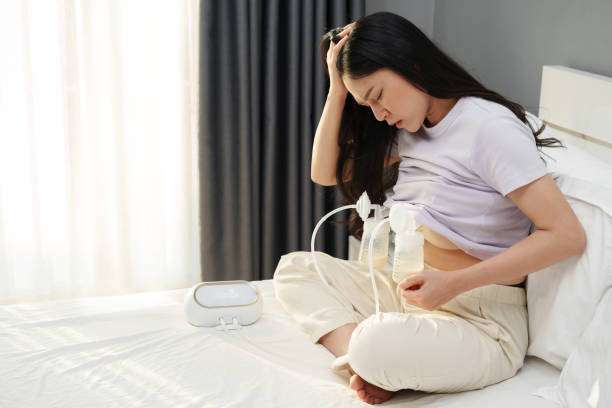
Many mothers have the same question when they use a breast pump for the first time:
How long should I pump?
Is 10 minutes not enough?
Is 20 minutes too long?
To be honest, giving only one “standard answer” to this question could be misleading.
The optimal duration for a single breast pump session is not determined by the machine, but by the body’s own needs.
Why is “pumping time” so important?
If the pump is too short, the following may occur:
- The milk let-down stopped before it had fully started.
- The mother is anxious because her milk supply seems low.
- The body mistakenly believes that the demand is “low,” making it more difficult to increase milk production later.
Pumping for too long can easily lead to:
- Nipple pain and fatigue
- Areola edema
- The breasts don’t get a real rest
Therefore, breast pumps are not better the longer you use them, but rather for the right amount of time.
The lactation mechanism determines the “time logic” of the breast pump.
The milk doesn’t flow out all at once.
Human lactation is a “stage-based” process:
- Stimulation phase (inducing milk let-down)
- First wave of milk production
- Short pause
- The second or even third wave of milk production
A good breast pump will help stimulate milk let-down in the first few minutes, and then enter a stable pumping phase.
If you stop right after the first wave ends, you may miss out on the subsequent milk production.
The actual physical reactions of most mothers
Based on feedback from numerous mothers and their practical experience:
- First 5–7 minutes: Stimulation + small amount of milk production
- Minutes 8–15: Main milk production phase
- 15–20 minutes: Supplement milk production or second let-down reflex.
This is why many people hear the advice of “15-20 minutes,” but this is just a range, not a hard and fast rule.
Common “reference duration” for a single breast pump session
Most mothers’ comfort zone
Pumping on one side:
15–20 minutes
Simultaneous pumping from both sides:
approximately 15 minutes
This time period covers the main milk let-down phase without causing excessive stimulation.
This is a range where “physical and time costs are relatively balanced”.
These situations are not suitable for simply extending the time.
- There is clearly no milk flow.
- Breasts become soft and no longer feel swollen
- Nipple discomfort begins
A breast pump at this point will not significantly increase milk production; in fact, it may cause fatigue.
Breast pumping varies for mothers at different stages of life.
Early postpartum period (first 2–4 weeks)
The lactation system is still being established.
Milk let-down is unstable
Suggestion:
15–20 minutes each time
Even if the milk supply is low, you should still pump the entire bottle.
I first started using a breast pump, I could hardly see any milk the first few times, but by persisting in completing the full let-down each time, the milk let-down became more and more stable.
Milk supply stabilization period
Clear milk let-down
Fixed milk flow rhythm
Suggestion:
When there is a noticeable milk flow
Wait 3-5 minutes after the milk flow stops.
This step is often overlooked by many mothers as a “hidden milk supply.”

Increase milk supply or decrease milk supply?
The goal is not how much to pump at a time.
Instead, it sends signals to the body.
Suggestion:
About 20 minutes each time
It can be used in conjunction with a short pause before restarting the breast pump.
But you must pay attention to comfort; pain does not equal effectiveness.
Why do some people not produce more milk even after pumping for 30 minutes?
This is a very common problem that can easily cause anxiety.
Possible reasons include:
- The breast pump’s suction power is not suitable.
- Size mismatch
- The body has completed this milk production.
Extending time ≠ increasing efficiency
If there is no obvious milk flow after 20 minutes, continuing to pump is mostly just “psychological comfort”.
How do I determine when it’s time to stop?
More important than time are these signals:
- Milk flow significantly reduced or stopped
- Breasts feel softer
- The breast pump’s suction initially only produced a pulling sensation.
When these three signs appear simultaneously, it means that the milk pumping process is complete.
Tips to improve efficiency
Preheating before pump
Applying a warm compress for 3–5 minutes can help milk let-down.
Relaxing in the pump
Being nervous and staring at the scale can actually affect milk production.
Breast pump mode switching
Switch from stimulation mode to breast pumping mode; do not use the same setting throughout.
Don’t compare your time with others.
Ten minutes for someone else is not the same as ten minutes for you.
FAQ:
Q1: Does the breast pump have to be used for a full 20 minutes?
Not necessarily. If milk has been expressed within 15 minutes, you can stop.
Q2: Does pumping for a longer time necessarily mean more milk?
No. The key is whether it covers the effective milk let-down reflex.
Q3: Can bilateral breast pumps shorten the stimulation time?
Yes. Simultaneous bilateral stimulation is usually more efficient.
Q4: Is it normal to feel some pain when pumping?
No. Pain usually indicates that the suction or the pump size is incorrect.
Do I need to pump for longer at night using a breast pump?
No. Prolactin levels are higher at night, which actually makes it easier to produce milk.

Summarize:
There is no single, universally accepted number regarding the optimal duration for a single breast pumping session.
For a breast pump that’s easier, has a more natural rhythm, and is suitable for long-term use, check out our carefully selected models for mothers at different stages, making pumping truly easier.