
Many mothers, after using a breast pump for a period of time, have a very real, yet difficult-to-judge, question:
“Why does the breast pump feel hotter and hotter?
Is it broken? Can I still use it?”
When I first encountered this situation, I was actually a little panicked. I was in a rush that day and pumped twice in a row. I felt that the machine was noticeably warm to the touch, and I immediately started imagining all sorts of safety issues. After studying it carefully, I realized that the heat itself wasn’t necessarily the problem. The key questions were how hot it was, why it was hot, and whether it could still be used.
This article will comprehensively explain the issue of overheating during continuous use of breast pumps, covering principles, common causes, safety boundaries, and practical solutions.
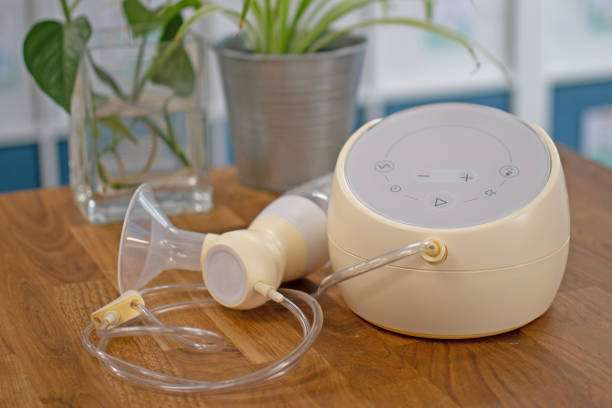
Why does a breast pump get hot during continuous use?
To understand heat generation, you must first understand how a breast pump works.
The motor itself generates heat when it is working.
,Regardless of the type of electric breast pump , the core component is the motor.
- motor running
- negative pressure is generated
- Drive the rhythm of inhalation and exhalation
As long as the motor is working, it will inevitably generate heat.
This is the same logic as hair dryers, shavers, and electric toothbrushes.
The only difference is
whether the heat is normal or not, and how quickly it dissipates.
Continuous use means heat doesn’t have time to dissipate
When a breast pump is used continuously:
- The motor runs continuously
- Internal heat accumulates continuously
- The casing temperature gradually increases
If there isn’t enough cooling time in between, you’ll feel a noticeable heat.
My own experience is:
A single session of 15–20 minutes is usually fine, but if used continuously with short intervals, the temperature rise will be very noticeable.
High load mode is more prone to overheating
The following situations can make a breast pump work harder:
- Long-term use of high suction power
- Too tight a seal
- Frequent changes in suction power
- Low battery but still forced to use
These factors will increase the load on the motor, leading to increased heat generation.
When is the breast pump getting hot?
Not all heat means danger.
The body is warm but not hot to the touch.
This is the most common and normal state:
- It feels warm to the touch.
- No stinging, no burning
- The functions are working perfectly.
This usually means the breast pump is working properly.
Heat generation is concentrated at the motor location
Most breast pumps source their heat primarily from:
- host
- Battery compartment
- near the motor module
Rather than a catheter or a site that comes into contact with the skin.
Localized warmth does not necessarily indicate overall abnormality.
After discontinuing use, the temperature will gradually decrease.
If you stop using it:
- Let it sit for 10–15 minutes
- Temperature dropped significantly
This indicates that the cooling system is functioning normally.
Which fever symptoms warrant increased vigilance?
In the following situations, it is not advisable to continue to “tough it out.”
It’s noticeably hot to the touch and may even sting.
If you find:
- Do not touch the body for a long time
- The heat sensation is noticeably uncomfortable.
It should be stopped immediately.
Fever accompanied by abnormal symptoms
For example:
- The suction suddenly weakened
- The sound became unusually loud
- Intermittent shutdown
These often indicate that the breast pump is overloaded or that a component is malfunctioning.
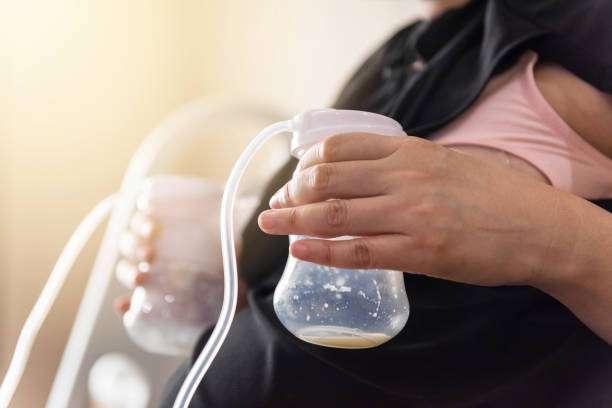
It starts to heat up after being used for a shorter and shorter time.
If you used to be able to use it for 20 minutes, but now it gets noticeably hot after only 5-8 minutes,
then it’s very likely that:
- Motor aging
- Heat dissipation channel obstructed
- Battery performance decline
What range is recommended for continuous use of a breast pump?
Based on most user feedback and actual experience, the general recommendation is
Recommendations for single use
15–20 minutes: Ideal
It is not recommended to exceed 30 minutes.
Recommended interval time
The interval between two uses should be at least 10–15 minutes.
If the device feels too hot, you can extend the time accordingly.
The habit I later developed was
After finishing one round, I casually placed the breast pump in a well-ventilated area, drank some water, and did some light exercise before continuing.
Practical tips for reducing breast pump heat generation
1. Don’t blindly pursue high suction power.
Many people subconsciously feel:
The stronger the suction, the higher the efficiency.
But in reality, high suction power often means:
- Motor load is greater
- Heats up faster
- Comfort actually decreased
2. Pay attention to cleanliness and sealing.
catheter blockage
Sealing aging
Connection problems
Both of these will make the breast pump “work harder,” thus increasing heat generation.
3. Give the breast pump some “breathing time.”
Especially during the high-frequency pumping stage, remember:
A breast pump is not a disposable item but a long-term companion.
Will fever affect the safety of breast milk?
This is the point that many mothers care about most.
Generally speaking:
Heat generation occurs in the main unit
No direct contact with breast milk
It will not be transferred into the milk.
A normal fever will not affect the safety of breast milk.
However, if abnormally high temperatures or equipment malfunctions occur, it is recommended to stop using the equipment and inspect it.
FAQ:
Q1: Does the breast pump overheating indicate a problem with its quality?
Not necessarily; most of it is normal working heat.
Q2: How long can I use it continuously before I have to stop?
It is generally recommended that each session not exceed 20–30 minutes.
Q3: Will fever harm the breasts?
A normal fever will not cause any problems, but an abnormally high fever should be stopped immediately.
Q4: Does it get hotter when using the device while charging?
Yes, charging and discharging simultaneously will increase heat.
Q5: Can I still use the breast pump after it gets hot?
Slightly warm is acceptable, but it is not recommended to make it noticeably hot to the touch.

Summarize:
A breast pump Getting hot during continuous use is not inherently a “frightening” thing. What
You really need to pay attention to whether you understand the limits of its use.
Once you learn to distinguish between “normal warmth” and “abnormal overheating,”
A breast pump will become a more reassuring and reliable everyday tool.
Click to view our curated breast pump series, which is better suited for daily high-frequency use in terms of continuous use, temperature control, and comfort.