
Before becoming a mother, many people think breastfeeding is simply about “feeding the baby.” But once they actually enter this stage, they realize that breastfeeding is not only a physical endeavor but also a continuous emotional ordeal.
The pain of engorgement, the complete disruption of their schedule, the pressure of external evaluation, and the sense of responsibility to “be on call for the baby at all times” can all quietly wear down a mother’s emotions.
It is against this backdrop that breast pumps have gradually transformed from mere “tools” into emotional buffers for many mothers. They not only help store breast milk but also alleviate psychological stress for mothers in many unseen moments.
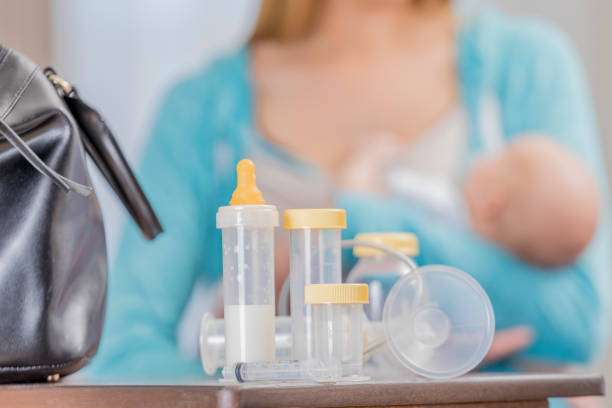
Feeling tense is actually a common occurrence for many mothers.
Mood swings during breastfeeding are not uncommon. Hormonal changes are already significant, and coupled with sleep deprivation and disrupted routines, anxiety, irritability, and even self-blame are easily triggered.
Sometimes it’s not that you don’t want to breastfeed properly, but rather that both your body and emotions are simultaneously sending signals that you’re “breaking down.”
Many mothers experience moments like this: even though their baby is asleep, they can’t relax because of engorgement, or when they’re out and about, they keep thinking about feeding time and can’t truly focus on the present moment.
This constant tension can gradually amplify their emotional burden.
Breast pumps: a sense of emotional control.
For many mothers, the most obvious emotional value of a breast pump lies in regaining a sense of control.
When breastfeeding is no longer entirely dictated by the baby’s schedule, and when physical discomfort can be alleviated in advance, psychological anxiety naturally decreases.
Being able to schedule breastfeeding at one’s own pace makes mothers feel that their lives are not completely out of control.
Sometimes, even just using a breast pump to deal with engorgement beforehand at night can help you get a good night’s sleep, and your mood the next day will be noticeably different.
This change is often not immediately apparent but accumulates slowly in daily life.
Emotional relief comes from physical relaxation.
Emotions and physical condition are interconnected. Discomfort from breast engorgement and blocked milk ducts can easily trigger irritability and low mood.
Breast pumps not only relieve physiological stress but also indirectly reduce emotional triggers.
When the body stops constantly sending signals of “pain” and “discomfort,” the brain naturally relaxes more easily.
Many mothers find that after using a breast pump for a period of time, the frequency of their mood swings decreases significantly, and their resistance to breastfeeding also diminishes.
Give Mom some uninterrupted time
The greatest luxury during breastfeeding is often not sleep but time that is entirely to oneself.
Even just twenty minutes, without being constantly interrupted by the baby’s needs, is a rare form of psychological rest.
Breast pumps, to some extent, provide mothers with this kind of space. Some listen to music while pumping, some read a few pages of a book, and some simply daydream quietly.
These seemingly insignificant moments are actually very important for emotional stability.
During a period of low mood for several days, it was this quiet time of breastfeeding that helped me gradually regain my balance, instead of being overwhelmed by the thought of “I must be strong.”

Buffering effect on emotional guilt
Many mothers experience intense self-blame when they feel down: they feel they are not patient enough, not strong enough, and not good enough.
This guilt is amplified, especially when they need to be separated from their babies temporarily or cannot breastfeed at any time.
A breast pump, to some extent, serves as an emotional buffer. It lets mothers know that even if they can’t breastfeed all the time, they are still contributing to their baby in their own way.
This psychological affirmation is crucial for alleviating guilt and self-doubt.
Breast pumps are not about “being lazy,” but rather about emotional self-care.
Societal expectations of breastfeeding can sometimes unintentionally place pressure on mothers, leading them to mistakenly believe that using a breast pump is a sign of compromise.
However, breast pumps do not diminish maternal love; rather, they protect a mother’s psychological boundaries.
When emotions are ignored for a long time, they can easily develop into deeper fatigue.
Knowing how to use a breast pump to adjust one’s rhythm is itself a mature way of self-care.
FAQ:
- Q1: Will using a breast pump make me dependent on breastfeeding?
A: No. A breast pump is just a tool. Many mothers switch to it flexibly according to different stages, which actually reduces emotional resistance. - a breast pump really helps.
when feeling down? A: For many mothers, relieving physical discomfort and increasing controllable time can itself reduce emotional stress. - Will
Does using a breast pump at night make me more tired? A: If used properly, it may actually reduce the discomfort caused by engorgement and help me get more stable rest. - Will
Does using a breast pump affect breast milk production? A: In most cases, it will not when used correctly; in fact, it can help with regular stimulation. - Q5: Does being in a bad mood mean I shouldn’t continue breastfeeding?
A: Emotions themselves are not a “qualification criterion.” Adjusting your mood and seeking support are equally important.

Summarize:
Breastfeeding should never be a test of endurance. Mothers who are emotionally stable and emotionally cared for are better able to accompany their babies’ growth for longer and with greater tenderness.
The significance of a breast pump goes far beyond its function; it silently supports a mother’s emotional well-being in many small, everyday moments.
If you are experiencing emotional ups and downs during breastfeeding, carefully consider choosing a suitable breast pump. It’s not about giving your all perfectly, but about making this journey less stressful and more relaxed. Taking care of your own emotions is the gentlest response you can give your baby.