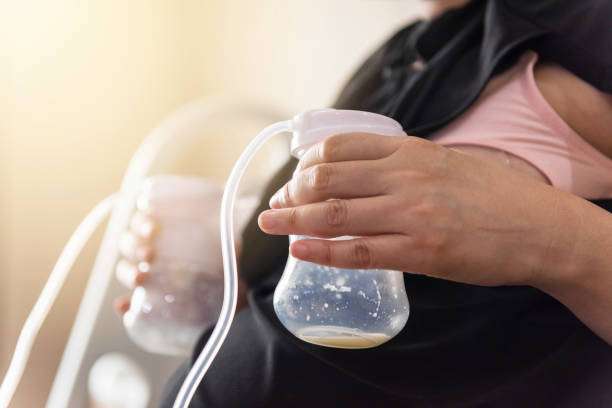
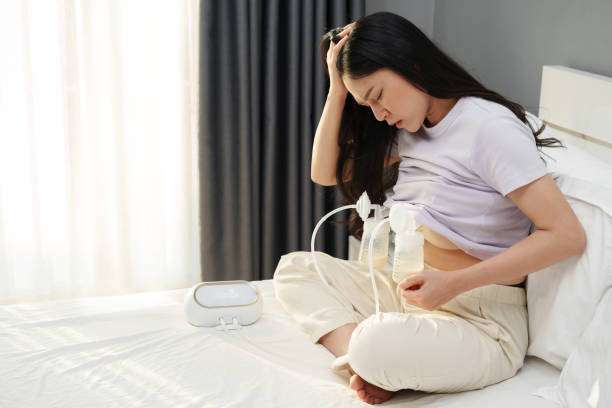
On the journey of breastfeeding, many mothers realize at some point that pumping is not a one-time thing but a long-term process that may last for months or even a year. Therefore, choosing a breast pump that is truly suitable for long-term use often directly affects the success of feeding, physical condition, and even emotional stability.
However, the reality is that most people focus on price, suction power, or appearance when choosing a breast pump, neglecting the crucial factor of “long-term use.” It’s only after using it for a while that they experience discomfort, fatigue, or even resistance to pumping.
This article aims to discuss, from a mother’s perspective, what kind of breast pump is truly suitable for long-term use and the often overlooked but very important details.
Breast pumps have higher requirements for “long-term use”?
During short-term use, physical discomfort and inconvenience are often within tolerable limits. However, once you enter a stable lactation period, pumping may become a repetitive daily activity, and any minor issues will be magnified.
Many mothers don’t notice the problem in the early stages until one day they start to feel resistant to breastfeeding or even subconsciously procrastinate. This is often not because of “lack of self-discipline,” but because the tool itself is not suitable for long-term use.
A breast pump suitable for long-term use is not one that “suctions the fastest,” but one that lasts a long time, is stable, and is easy to use.

Standard 1: Suction power should be “sustainable,” not “the more the better.”
Many advertisements emphasize suction power figures, as if higher suction power equates to higher efficiency. However, in long-term use, what truly matters is whether the suction power is stable, adjustable, and conforms to the body’s response.
Prolonged use of a breast pump, especially if the suction level fluctuates too much or is not adjusted precisely, can easily lead to the following issues:
- Initially, the suction was too strong, causing nipple discomfort.
- Frequent manual adjustments are required during breast pumping.
- Each time I have to readjust to the rhythm
A breast pump truly suitable for long-term use should have a smooth and gradual change in suction, allowing the body to complete milk expression in a relaxed state, rather than requiring you to “endure the pain while using it.”
Standard Two: Does the rhythm closely resemble actual sucking?
Prolonged breast pumping is not only a physiological behavior but also a conditioned reflex for the body. If the breast pump’s rhythm is too mechanical, it can easily affect the lactation response.
Many mothers find after using it for a period of time that even when the time comes, the breast let-down is delayed, which is often related to the rhythm design.
A breast pump suitable for long-term use typically has the following features:
- Clear stimulation phase and lactation phase
- The rhythm is natural and not rushed.
- The frequency can be fine-tuned according to individual circumstances.
When the rhythm closely resembles a baby’s actual sucking, the body is more likely to “cooperate,” making the breastfeeding process much easier.
Standard 3: The comfort of long-term contact areas is severely underestimated.
In the long run, the most uncomfortable part for mothers is not the suction but the parts that are in constant contact with the skin.
If the material is too hard and doesn’t fit well, you might be able to tolerate it for a short time, but over time, skin sensitivity, redness, swelling, and even broken skin will gradually appear.
A breast pump suitable for long-term use is often more user-friendly in the following details:
- The contact areas are soft and have a cushioning design.
- It fits naturally and doesn’t require forceful pressing.
- No noticeable indentations will be left after breast pumping.
Sometimes, it is these seemingly insignificant details that determine whether a mother can persevere.

Standard 4: Noise and psychological burden will only become apparent with long-term use.
In the short term, the noise may just be “a little noisy.” But in the long term, especially at night or in public environments, the noise can gradually become a source of psychological stress.
Many mothers, after repeatedly using a breast pump, unconsciously speed up their movements and shorten the time, just to “finish quickly,” which is actually detrimental to lactation.
Breast pumps suitable for long-term use often have relatively quiet operation, making breast pumping no longer a task that needs to be “stressfully completed,” but rather a relatively peaceful personal time.
Standard Five: Is the operation “brainless”?
Long-term use means high-frequency use, and high-frequency use is most vulnerable to complexity.
If you need to: every time you use a breast pump
- Double-check that you have installed it correctly.
- Worried about air leakage or milk leakage
- The cleaning process is complicated.
Even the best features will eventually wear down your patience.
A breast pump that is truly suitable for long-term use often has a very intuitive operating logic and can complete the entire process smoothly even when fatigued or at night.
Criterion Six: Does it support changes in lifestyle?
A breast pump used long-term must be able to adapt to changes in the mother’s lifestyle:
- From day to night
- From home to going out
- From one-on-one care to needing to switch between multiple tasks
When breast pumps can be more flexibly integrated into daily life, rather than requiring mothers to “set aside special time” for them, long-term adherence becomes more realistic.
Standard Seven: The long-term effects of use on emotions cannot be ignored.
Many people only talk about the function but ignore the fact that breast pumping is a highly emotional thing.
If a breast pump causes discomfort, anxiety, or restriction during long-term use, it can easily lead to psychological resistance. Conversely, when the pumping process is smooth and controllable, mothers are more likely to build confidence and feel more at ease with breastfeeding.
Sometimes, it’s a convenient procedure or a quiet period of time that makes breast pumping no longer just a “task,” but an acceptable daily routine.
FAQ:
Q1: Will long-term use of a breast pump cause dependence?
No. A breast pump is just a tool to help with milk expression. The key is whether it is used scientifically and whether it respects the body’s rhythm.
Q2: Will using it multiple times a day cause significant damage to the nipples?
If the breast pump is suitable for long-term use and has appropriate suction and fit, it is actually more gentle than frequent manual adjustments or unsuitable equipment.
Q3: Will long-term use of a breast pump affect breastfeeding?
In most cases, no, provided that the rhythm is designed properly and breastfeeding interaction is maintained when conditions permit.
Q4: Does longer use require stronger suction?
Not necessarily. Many mothers find a gentler yet more effective pumping method more suitable during the stable breastfeeding period.
Q5: When should you consider replacing your breast pump?
Frequent discomfort, decreased efficiency, or psychological resistance during long-term use are often warning signs.
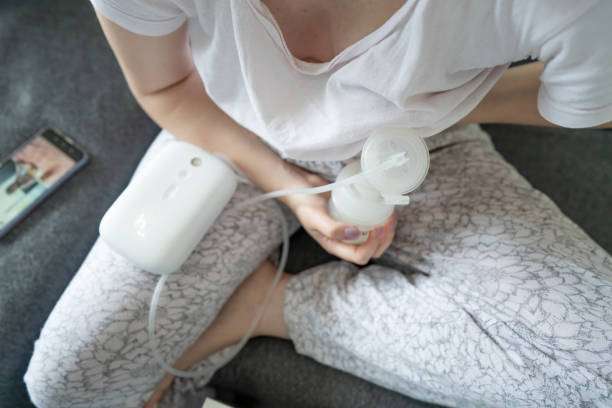
Summarize:
Breastfeeding is never just about the baby; it’s also about the mother’s physical and emotional well-being. Choosing a breast pump that’s truly suitable for long-term use isn’t about chasing after the best specifications but about securing a more sustainable feeding method for yourself.
When breast pumping is no longer something that needs to be “forced,” many mothers find that persisting becomes much more natural.
If you’ve already entered or are about to enter the long-term pumping phase, consider carefully comparing your current breast pump to these standards . Choosing a product truly suitable for long-term use will also lighten the burden of your breastfeeding journey.