
During breastfeeding, breast pumps have become an essential tool for many mothers. Whether they are working mothers, experience nighttime milk production, or want to ensure their babies have access to breast milk at any time, breast pumps greatly improve feeding convenience.
.However, one often overlooked problem is noise pollution . At home, in the office, or even in public places, excessive noise can not only affect relaxation but also disturb family or colleagues.

breast pump noise
1. Motor operating noise
.A breast pump is a miniature motor . It generates negative pressure through an electric pump, simulating the action of a baby suckling at the breast.
The motor will generate high-frequency vibration when it starts.
In negative pressure circulation, the motor frequency and power directly affect the noise level.
,I once used an old-fashioned electric breast pump, and the first time I used it at night, I could clearly hear a buzzing sound, which woke up my sleeping baby. Later, I switched to a silent breast pump , and the noise was significantly reduced, making for a completely different user experience.
2. Vacuum pump and airflow noise
Besides the motor itself, the pump body structure of the breast pump is also a source of noise.
The sound of air being drawn away is produced.
When the exhaust port or pipeline is not sealed, the air impact produces a high-frequency sharp sound.
,Especially with multi-stage breast pumps , if the vent design is not smooth enough, a “whooshing” or “hissing” noise may occur during the pumping process.
3. Vibration of the bottle and silicone parts.
Many breast pump connectors, bottles, and soft silicone sleeves vibrate slightly during breast pumping.
When a silicone cup is pressed tightly against the breast, the strong suction can easily cause micro-vibrations.
When the walls of a plastic bottle are thin and the joint is loose, the sound will be amplified.
,When using a dual-sided breast pump , I found that as long as the tubing is securely installed and the silicone cup fits well, the noise is significantly reduced.
Breast Pump Technology Explained: Noise Control Principles
1. Motor frequency and noise control
.Advanced breast pumps typically employ low-noise motors or frequency reduction technology .
By controlling the motor speed, a stable suction output is achieved.
High-frequency vibrations are reduced, and noise is significantly decreased.
Some models use brushless DC motors, which have a longer lifespan and a softer sound.
:Tip : Choosing a breast pump with multiple suction levels can reduce noise while ensuring efficient milk expression. It’s especially quiet when used on a lower setting at night.
2. Optimization of air path and pump body
Quiet operation is usually achieved through optimizations in the airflow design:
- Keep pipes as short as possible and ensure smooth bends to avoid noise caused by air turbulence.
- The exhaust valve and vacuum pump are wrapped with sound-insulating material.
- The dual-sided synchronous pump body reduces overall noise through resonance suppression technology.
I use a high-end dual-sided breast pump in the office. It’s almost silent, with only a faint airflow sound, making it perfect for operating next to colleagues.
3. Material selection and vibration absorption
The materials used in baby bottles, silicone sippy cups, and connecting tubes have a direct impact on noise levels.
- High-density bottle walls reduce vibration resonance
- The silicone cup body has a moderate softness, providing both comfort and absorbing some of the motor vibration.
- The hose connection is tight to prevent air leakage and sharp noise.
These details vary significantly in actual use, and choosing a high-quality accessory combination will greatly improve the user experience.

Practical Tips: Methods to Reduce Breast Pump Noise
1. Nighttime usage recommendations
- Use low suction mode
- Place the breast pump on a soft mat to absorb vibration.
- Ensure the bottle and silicone cup fit the breast well.
I tried placing a small cushion next to the bed and gently placing the breast pump on it, and the noise instantly decreased by about 30%.
2. Piping and interface inspection
- Before each use, check that the pipes are tight.
- If the hose ages or cracks, it needs to be replaced promptly.
- Even a slight looseness in the connectors can produce a “whooshing” sound.
3. Regular cleaning and maintenance
Dust and milk residue can alter airflow resistance and also increase noise.
- It is recommended to clean the detachable parts daily.
- Perform regular light wiping and maintenance on the pump body.
4. Environmental Impact
The sound will be amplified when placed on a hard surface.
- Placing it on a soft pad or cloth surface can absorb some of the vibration.
- Soft nighttime lighting combined with low-power suction creates a quiet and relaxing environment.
FAQ:
Q1: My breast pump is noisy. Does that mean it’s of poor quality?
Not entirely. Noise can originate from various sources, including the motor, air passages, and vibrations of components. High-quality breast pumps utilize optimized technology to significantly reduce noise.
Q2: Are dual-sided
Noisier than single-sided ones? Not necessarily. High-quality dual-sided breast pumps employ resonance suppression design, resulting in noise control that is even better than some single-sided models.
Q3: Will using it at night affect the baby?
Most low-noise fans are very quiet when operating on the low setting and will not easily wake the baby.
Q4: Can mechanical noise and airflow noise be completely eliminated?
No, they cannot be completely eliminated, but by choosing high-quality products, proper installation, using low suction power, and using soft pads for vibration isolation, the noise experience can be significantly reduced.
Q5: Will the noise from the breast pump affect milk expression efficiency? A:
With proper control of suction power and frequency, it will not affect efficiency. The noise mainly comes from the mechanical components and airflow and does not affect milk expression.
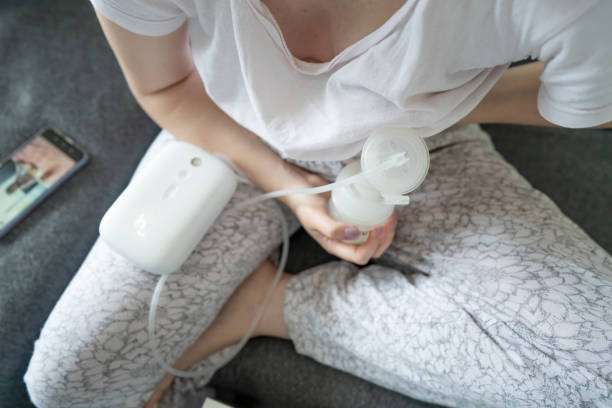
Summarize:
If you’ve ever been bothered by noise and want to easily express milk at night or in the office, consider upgrading to a quiet breast pump.
High-quality HDPE, a low-noise motor, a soft silicone cup, and an optimized airflow design allow you to express milk easily without disturbing your baby and family.
Check out our breast pump series and enjoy an efficient and quiet breastfeeding experience.