
During breastfeeding, breast pumps have become an essential tool for many new mothers. However, a hidden but frequent problem often arises: even though the machine is working, the suction feels unstable, milk supply decreases, and the user experience even deteriorates significantly. Many mothers mistakenly attribute this to changes in their physical condition or think, “That’s just how it is,” but they overlook a crucial reason—air leakage in the breast pump.
Air leakage isn’t an immediate, obvious malfunction of the equipment; it’s more like a small problem that slowly erodes the experience. If not diagnosed and addressed promptly, it can not only affect the efficiency of the breast pump but also potentially cause physical discomfort.
When I first used the breast pump, I also experienced several consecutive days of significantly longer operating time and fluctuating suction strength. At the time, I thought it was a problem with my physical condition until I checked the interface and seals and found the real root of the problem.
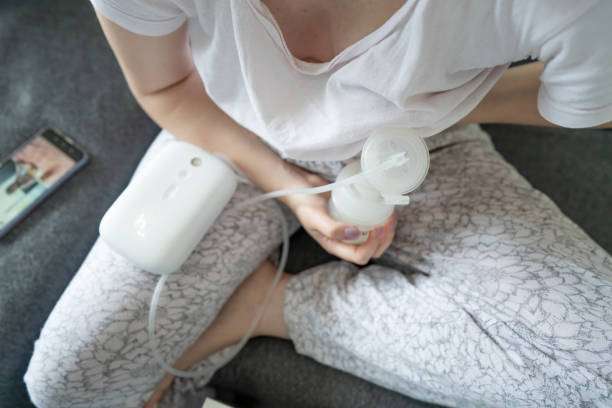
What is an air leak? Why is it easily overlooked?
Air leakage refers to the disruption of the sealed negative pressure environment that a breast pump should create during operation, resulting in incomplete suction transmission. It typically manifests as:
The suction strength fluctuates.
The machine makes a sound but has no corresponding effect.
The longer the usage time, the less benefit was gained.
These characteristics can easily be misinterpreted as a personal condition or changes in milk production.
to identify a breast pump leak
If the suction power is unstable, it may
be normal for the first few seconds after startup, but quickly becomes weak or requires frequent adjustments to a higher setting to maintain the effect. This is most likely due to a problem with the seal.
When the machine makes noise but is leaking air,
The breast pump may make a louder running sound than usual, or even a slight hissing sound, but the actual milk expression effect will decrease.
If the usage time is significantly longer than
usual, and the same operation takes more than 30% longer than usual, it’s something to be wary of. I had a similar experience myself; I only regained normal suction power after checking for a loose connection.
feel
a slight airflow or coolness at the contact point, requiring frequent adjustments; this usually indicates an incomplete seal.
If the breast pump frequently slips off or requires manual support
to maintain its position, it is likely due to air leakage rather than incorrect posture.
Increased local discomfort after use and increased
Air leakage can cause the breast pump to repeatedly compensate for suction, leading to localized pulling or fatigue.
Five most common sources of air leakage
As seals age or deform,
Silicone components lose their elasticity over time and with frequent cleaning and disinfection.
improper installation of the interface
can still disrupt the sealed environment if the interface is not installed correctly, even with slight misalignment.
size is mismatched
or the interface is not tight, it will essentially result in continuous air leakage.
Regularly inspecting transparent parts under light can help identify minor cracks or damage that is difficult to see with the naked eye.
Cleaning residue can affect the seal, and
Detergent residue or grease buildup may make the seal “look normal but not fit properly.”
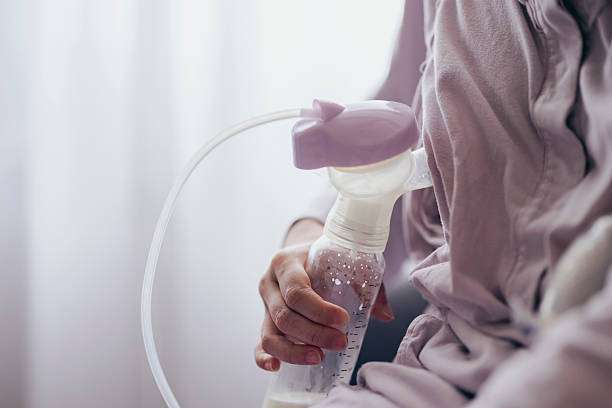
Four steps to check for leaks in your breast pump at home
No-load test: Start the device without touching the skin and observe whether the suction is stable.
Interface press test: Gently press the connection point and listen for any changes in airflow.
Seal inspection: Stretch and observe elasticity and rebound speed.
Replacement verification: Replace a single component with a spare part to quickly locate the problem.
Air leakage ≠ poor quality
Many mothers, upon discovering a leak in their breast pump, immediately conclude that “the equipment is of poor quality.” In reality, leaks are more often due to:
Frequency of use
Cleaning methods
Storage environment
Relevant. Rationally determining the source of the problem is more important than frequently replacing the entire machine.
Daily habits to reduce air leaks
Replace easily damaged seals regularly
Gently pull to confirm that it is in place after each installation.
Avoid repeatedly disinfecting the same part at high temperatures
Avoid squeezing or stacking heavy objects when storing.
These small habits can significantly extend breast pump stability and improve the user experience.
FAQ
Q1: Can I still use it if there is a slight air leak?
A: It is possible to use it for a short period of time, but the suction power and comfort will decrease. It is not recommended to ignore it for a long time.
Q2: Does a leak always require replacing the entire unit?
A: In most cases, no. Prioritize checking the seals and connections.
Q3: Can new equipment also leak air?
A: Yes, improper installation or incorrect size selection are the most common reasons.
Q4: How often should I get checked?
A: It is recommended to have a quick check every 1-2 weeks. Frequent users can shorten the interval.
Conclusion
Air leaks may not be obvious malfunctions, but they are “invisible killers” that degrade the user experience. Learning to identify and address them promptly is essential to ensuring your breast pump truly delivers its value.
a breast pump with stable sealing, easy-to-replace parts, and a comfortable user experience, we recommend prioritizing products with a mature parts supply chain and comprehensive after-sales service. Choosing the right product in advance is much more worry-free than trying to fix it afterward.
Click to learn about a variety of high-quality breast pumps for more efficient and comfortable use so that leaks no longer steal your experience.