
Waking up at night to nurse is a challenge almost every new mother faces. Nighttime feedings not only disrupt a mother’s sleep schedule but can also affect milk supply. Many mothers ask, “Is a breast pump suitable for nighttime feedings?” This article will provide comprehensive information from multiple perspectives, including nighttime feeding patterns, the function of breast pumps, usage tips, and precautions, to make nighttime feedings easier.
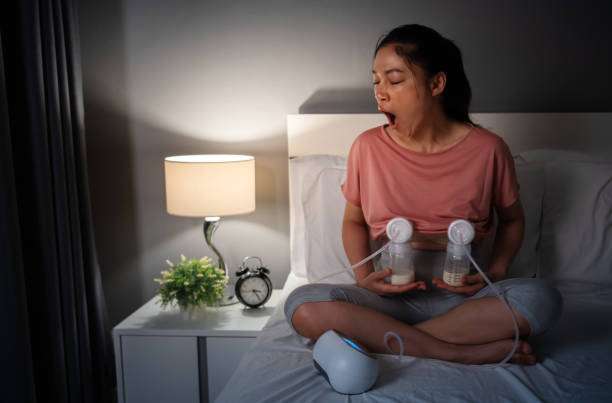
Milk Demand and Challenges During Nighttime Breastfeeding
Nighttime feeding typically occurs in the first three months after a baby’s birth, and in some cases, it can last up to six months. At night, babies still need sufficient milk intake, and breast milk production peaks at night. If mothers are unable to breastfeed adequately during this time, it can easily lead to an imbalance between milk supply and demand, resulting in breast engorgement or reduced milk production.
In my experience, during the first few weeks, I was woken up almost every two hours by nighttime feedings. My milk supply was unstable, and coupled with the fatigue from staying up late, the pressure of breastfeeding was immense. Later, I started using a breast pump to assist with nighttime pumping, which not only relieved breast engorgement but also ensured a smooth supply of milk for my baby at night.
Breast Pumps During Nighttime Feedings
To ensure a stable milk supply, breast milk production may not be able to keep up with frequent nighttime feedings. Using a breast pump allows you to express extra milk before your baby falls asleep or before bedtime and store it for later use. This way, even if your baby wakes up at night, you’ll have enough milk and won’t panic.
Relieving breast engorgement and long intervals between nighttime feedings can lead to breast problems such as engorgement and blocked milk ducts. A breast pump can be used to pump milk at set times at night, relieving breast pressure and reducing the risk of mastitis.
Improving sleep quality: After using a breast pump, even if the baby wakes up at night, the mother can feed the baby with stored breast milk or occasionally mix-feed. This allows the mother to get continuous sleep, restore her energy, and have more energy to cope with the childcare tasks the next day.
To address insufficient sucking strength in newborns at night, which can lead to inefficient breastfeeding, a breast pump can express milk before the baby wakes up, ensuring the quality and quantity of nighttime feedings.
Recommendations for Choosing a Breast Pump
When using a breast pump during nighttime feedings, choosing the right device is especially important:
- A quiet design is essential for nighttime breastfeeding. A loud breast pump can easily wake the baby. A quiet or low-noise breast pump is the best choice for nighttime feedings.
- Double or single pumps can be used. Double pumps can pump out more milk in a shorter time, saving time during nighttime use. Single pumps are suitable for lightweight or portable applications.
- Comfortable suction: During nighttime feedings, breasts may be more sensitive. Choosing a breast pump with adjustable suction allows you to adjust the suction to your comfort level and avoid pain.
- Easy to clean and carry. Since breast pumps are frequently used at night, the ease of disassembly, assembly, and cleaning directly impacts the user experience. Additionally, the lightweight design makes it easier to carry if you need to prepare for nighttime feedings while out and about.
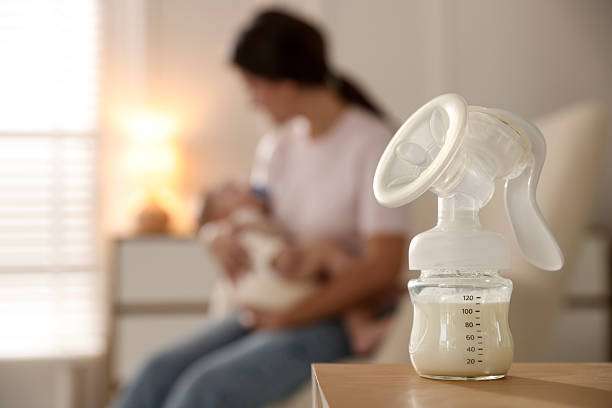
Tips for Using a Breast Pump for Night Feedings
- Establish a breast pumping schedule based on your baby’s nighttime feeding pattern. You can use a breast pump to pump milk before your baby goes to sleep or after your baby has been asleep for a while so that you can store enough milk for later use.
- Before pumping, prepare your breasts by applying a warm towel or gently massaging them to promote milk production and improve breast pump efficiency.
- Adjust the suction power appropriately. Breasts are more sensitive at night, so it is recommended to start with a low suction power and gradually increase it to a comfortable level.
- Proper storage of pumped breast milk: Breast milk should be stored in a sealed container in the refrigerator or freezer to ensure the safety and freshness of the baby during nighttime feedings.
- Avoid over-reliance on breast pumps as a supplementary tool, not a complete replacement. During nighttime feedings, breastfeeding is still recommended as much as possible to maintain parent-child interaction and support the baby’s sucking skills development.
As a mother who has experienced the peak of nighttime breastfeeding, I deeply understand the challenges that nighttime breastfeeding poses to my sleep schedule. When I first started using a breast pump, I was worried that it would be complicated to operate and take up too much time. After actually using it, I found that using a breast pump at night not only reduced breast discomfort but also allowed my baby to get a stable milk supply. I was finally able to take a nap while my baby was also well-fed.
In addition, the breast pump allowed me to build up breast milk reserves before returning to work, significantly reducing the stress of nighttime feedings. For many new mothers, the breast pump is not only a lifesaver during nighttime feedings but also a source of psychological security.
Precautions and Potential Problems
- Excessive pumping can lead to an overproduction of breast milk. During nighttime feedings, it is necessary to control the amount and frequency of pumping to avoid excessive milk production and breast discomfort.
- Keep the breast pump clean. It is used frequently during nighttime feedings, so you must ensure that the breast pump is cleaned thoroughly after each use to prevent bacterial growth.
- Observe your baby’s reaction. Some babies’ nighttime feeding habits may suddenly change, and you may need to adjust your pumping strategy to ensure that your baby gets enough milk and sucks smoothly.
- In conjunction with your doctor’s advice, especially if you have blocked milk ducts, insufficient milk supply, or abnormal nighttime feeding frequency, it is recommended to consult a professional doctor or lactation consultant.
FAQ
Q1: Will using a breast pump during nighttime feedings affect breast milk production?
A1: When used properly, it will not affect breast milk production; on the contrary, it can help stimulate milk secretion and maintain a balance between supply and demand.
Q2: My baby doesn’t wake up for nighttime feedings. Is it suitable to use a breast pump to store breast milk?
A2: Absolutely. Pumped breast milk during nighttime feedings can be stored for later use, ensuring a sufficient milk supply even if the baby sleeps for extended periods.
Q3: Will frequent use during nighttime feedings cause pain?
A3: Choosing a device with adjustable suction and high comfort, along with massage and warm compresses, generally will not cause pain.
Q4: Can a breast pump completely replace nighttime breastfeeding?
A4: It is not recommended to completely replace nighttime breastfeeding. A breast pump is mainly an auxiliary tool, and it should still be used in conjunction with the baby’s actual sucking needs.
Summary
Nighttime breastfeeding is a challenge for new mothers, testing their patience and milk management skills. Proper use of a breast pump during nighttime feedings can not only ensure milk supply and relieve breast discomfort but also improve the mother’s sleep quality, making nighttime feedings easier.
Mothers can choose a suitable breast pump based on their own schedule, their baby’s nighttime feeding pattern, and breast sensitivity , and arrange pumping times reasonably. Combined with milk storage techniques, this will make nighttime feedings smoother.