
Among maternity and baby products, breast pumps have almost become a “standard” for new mothers. Whether it’s prenatal checkups, hospital recommendations, or experiences shared by friends, one question always comes up repeatedly: Is a breast pump suitable for every mother?
Some people find it easy to use and experience the convenience of freeing up their hands and improving efficiency; others, however, find it difficult to adapt and may even experience pain, anxiety, or frustration. In fact, this is not a simple matter of “good or bad,” but rather a tool compatibility issue closely related to physical condition, breast health, and psychological expectations.
A breast pump is truly right for you, from the perspectives of individual differences, user experience, potential discomfort, and suitable and unsuitable groups.

The Importance of Individual Differences in Breastfeeding
Many mothers, when discussing breastfeeding, tend to overlook a crucial point: everyone’s body reacts differently. These differences primarily manifest in:
The diameter and distribution density of mammary ducts vary
Differences in nipple shape and sensitivity
Hormone levels respond differently to stimuli
The degree to which emotions affect the lactation reflex varies.
Some mothers find their milk production stabilizes after regular stimulation; others struggle to establish an ideal lactation rhythm even with frequent attempts. When I first started using a breast pump, I was also confused by the differences between my experiences and those of my friends. Later, I realized that comparisons are often a source of stress, not a solution.
Breast pump compatibility from a physiological perspective
Breast pumps work by simulating a baby’s sucking, rhythmically stimulating the milk ducts. However, not every mother responds to this stimulation in the same way.
Mothers with highly sensitive nipples may experience stinging or discomfort, or even a strong sense of rejection, when
using a breast pump. Even at the lowest intensity setting, tension may suppress the milk ejection reflex.
For women with narrow or easily blocked milk ducts
who have a history of recurrent blocked milk ducts or engorgement, mechanical suction may not be able to completely replace the baby’s dynamic sucking, and manual massage may be necessary.
For mothers who have a slow postpartum recovery or who have had a cesarean section
, additional external stimuli may increase discomfort and affect the overall recovery experience when the body has not fully recovered and pain persists.
Psychological and physical condition: an important factor affecting experience
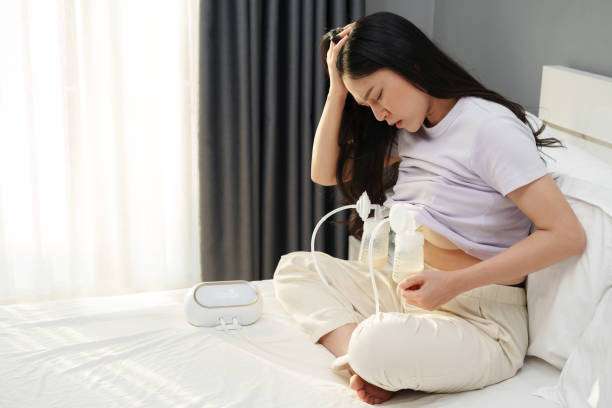
Psychological state has a huge impact on the experience of using a breast pump.
Some mothers are sensitive to time and efficiency and are prone to self-blame or anxiety when they “can’t express milk” or “the milk flow is unstable,” and anxiety itself can inhibit the milk ejection reflex.
I used a breast pump at night, but repeated use didn’t yield the desired results, causing me stress and hindering milk flow. After adjusting my mindset and lowering my expectations, the experience improved significantly. This shows that the tool itself isn’t the problem; the key is whether the user’s mental state matches their current stage of development.
Relatively easy-to-adapt mother types
The following mothers are usually more likely to adapt to a breast pump:
My milk ducts are clear, and I rarely experience blocked milk ducts.
They are not averse to mechanical rhythms and have a high level of psychological acceptance.
I hope to improve my time management and balance work and rest.
The baby is temporarily unable to breastfeed frequently, but we still hope to maintain breast milk supply.
For them, breast pumps are more of an efficiency aid than a source of stress.
Situations requiring caution or temporary suspension of use
We recommend carefully evaluating the use of a breast pump in the following situations:
Nipple damage and significant pain
Mood swings and postpartum anxiety not yet relieved
to the sound or mechanical feel of a breast pump.
Despite experiencing obvious discomfort, it was still forced to be used.
Breastfeeding should not be based on suffering. If you experience prolonged discomfort while using a breast pump, it may not be suitable for your current stage.
Applicability is dynamic.
Whether something is suitable or not is not a one-time decision but a judgment made at different stages.
Some mothers do not adapt well in the early postpartum period, but their experience will be significantly improved as they recover physically and emotionally and try it again; some mothers are highly dependent on it at a certain stage but gradually reduce the frequency of use later.
Therefore, breast pumps can be seen as a temporary tool, rather than a choice that must be used long-term.
In the early stages of using a breast pump, I felt anxious because of the difficulty in milk flow and even doubted my ability to breastfeed. Later, I adjusted my posture and rhythm and tried again when I was emotionally stable and found that the milk flow was much smoother.
FAQ:
Q1: Can mothers with a cold constitution use it?
A: A cold constitution is not an absolute contraindication, but it is important to keep warm and comfortable and avoid using it if you are not in good physical condition.
Q2: I feel uncomfortable when using it. Is it because I’m using it incorrectly?
A: It may be that the operation method or rhythm is not suitable, or it may be that your body is not used to it. It is necessary to distinguish between short-term discomfort and persistent discomfort.
Q3: Will not using a breast pump affect breast milk supply?
A: No. Breastfeeding and manual stimulation can maintain milk supply equally well; there is no “necessary dependence.”
Q4: Is it better to use it for a longer time each time?
A: Not necessarily. Overstimulation may cause fatigue and discomfort. Quality is more important than duration.
Q5: Is a breast pump suitable for anxious mothers?
A: For mothers who need a sense of security and time planning, it is more likely to alleviate some anxiety, provided that it is used gently and the psychological expectations are reasonable.

Conclusion:
There is no standardized path to breastfeeding; your physical sensations are more important than any experience post.
If you are considering choosing a breast pump, it is recommended to make a rational assessment: comfort, adjustability, and ease of cleaning are more important than simply pursuing “what everyone else is using.”
breast pumps suitable for mothers with different physical conditions, so that the tool truly serves you, rather than adding new stress.